
For decades, science fiction authors have imagined scenarios in which life thrives on the harsh surfaces of Mars or our Moon, or in the oceans below the icy surfaces of Saturn’s moon Enceladus and Jupiter’s moon Europa. But the study of habitability—the conditions required to support and sustain life—is not just confined to the pages of fiction. As more planetary bodies in our solar system and beyond are investigated for their potential to host conditions favorable to life, researchers are debating how to characterize habitability.
While many studies have focused on the information obtained by orbiting spacecraft or telescopes that provide snapshot views of ocean worlds and exoplanets, a new paper emphasizes the importance of investigating complex geophysical factors that can be used to predict the long-term maintenance of life. These factors include how energy and nutrients flow throughout the planet.
“Time is a crucial factor in characterizing habitability,” says Mark Simons, John W. and Herberta M. Miles Professor of Geophysics at Caltech. “You need time for evolution to happen. To be habitable for a millisecond or a year is not enough. But if habitable conditions are sustained for a million years, or a billion…? Understanding a planet’s habitability takes a nuanced perspective that requires astrobiologists and geophysicists to talk to each other.”
This perspective paper, which appears in the journal Nature Astronomy on December 29, is a collaboration between Caltech scientists on the Pasadena campus and at JPL, which Caltech manages for NASA, along with colleagues representing a variety of fields.
The study emphasizes new directions for future missions to measure habitability on other worlds, using Saturn’s icy moon Enceladus as a primary example. Enceladus is covered in ice with a salty ocean beneath. In the last decade, NASA’s Cassini mission acquired chemical measurements of plumes of water vapor and ice grains jetting out from fissures at Enceladus’s south pole, discovering the presence of elements like carbon and nitrogen that could be conducive to life as we know it.
These geochemical properties are sufficient to describe the moon’s “instantaneous” habitability. However, to truly characterize Enceladus’s long-term habitability, the paper emphasizes that future planetary missions must study geophysical properties that indicate how long the ocean has been there, and how heat and nutrients flow between the core, the interior ocean, and the surface. These processes create important geophysical signatures that can be observed, as they affect features such as the topography and thickness of Enceladus’s ice crust.
This larger framework for studying habitability is not limited to the study of Enceladus. It applies to all planets and moons where researchers search for the conditions necessary for life.
“This paper is about the importance of including geophysical capabilities in future missions to the ocean worlds, as currently being planned for the Europa Clipper mission targeting Jupiter’s moon Europa,” says Steven Vance, a JPL scientist and deputy manager for the Lab’s planetary science section, as well as a co-author of the paper.
The paper is titled “Sustained and comparative habitability beyond Earth.”The study’s lead author is Charles Cockell of the University of Edinburgh and JPL. In addition to Cockell, Simons, and Vance, additional co-authors are Peter Higgins of the University of Toronto; Lisa Kaltenegger of Cornell University; and Julie Castillo-Rogez, James Keane, Erin Leonard, Karl Mitchell, Ryan Park, and Scott Perl of JPL. Funding was provided by the United Kingdom’s Science and Technology Facilities Council, the Natural Sciences and Engineering Research Council of Canada, and NASA.
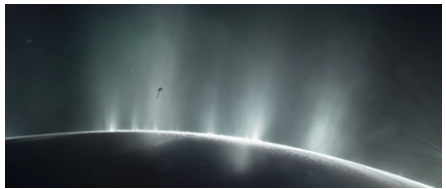
Dramatic plumes spray water ice and vapor from many locations along the famed “tiger stripes” near the south pole of Saturn’s moon Enceladus. The tiger stripes are four prominent, approximately 84-mile- (135-kilometer-) long fractures that cross the moon’s south polar terrain.
Credit: NASA/JPL-Caltech/Space Science Institute